
Technology continues to evolve at an absolute breakneck pace, completely transforming how we work, talk to one another, study, and run our businesses. In 2026, the massive leaps we are seeing in artificial intelligence, everyday automation, cloud infrastructure, cybersecurity, and immersive digital platforms are reshaping industries all over the globe. Organizations are no longer just looking at technology as a luxury; they are investing heavily in digital tools simply to keep their doors open, improve their speed, and protect their market share in a highly competitive digital world.
Understanding these emerging technology shifts is not just for computer scientists anymore. For everyday professionals, business owners, and students, keeping up with these trends is the best way to prepare for the future and spot exciting new career opportunities before everyone else does.
The Connected Digital Frontier. Source: KanawatTH / Getty Images
Artificial Intelligence Becomes Everyday Magic
Artificial Intelligence (AI) has moved past the experimental phase and is now a central engine powering our daily digital lives. If you have typed an email and watched the app finish your sentence, or asked a virtual assistant to summarize a long document, you have felt its impact. Today, AI tools are deeply woven into text creation, frontline customer support, deep data analytics, and software design. Instead of forcing people to learn complex programming code, AI lets us interact with computers using everyday human language.
Generative AI platforms have become incredibly sophisticated. They no longer just output generic answers; they can build hyper-realistic graphics, perfectly formatted business reports, customized coding blocks, and engaging marketing videos in a matter of seconds. For businesses, this means teams can hand off their creative roadblocks and routine writing tasks to an digital partner, allowing them to focus entirely on strategic decisions, creative design, and building deeper human connections.
The New Wave of Smart Automation
For a long time, basic automation just meant setting up simple rules, like telling a computer to send an email alert whenever a customer filled out a web form. Today, intelligent automation takes things a massive step further by bringing machine learning and smart decision-making together into our daily workflows.
Modern automation tools do not just follow a rigid path; they can actually read a complex document, figure out what it means, look for errors, and decide what the next logical step should be without needing a human to guide them. Across industries like banking, local healthcare clinics, and international manufacturing plants, these systems are taking over the tedious, time-consuming administrative chores. This shift lowers business operating costs, eliminates human data entry errors, and ensures that projects move forward without getting stuck in bureaucratic bottlenecks.
Living and Working in the Cloud
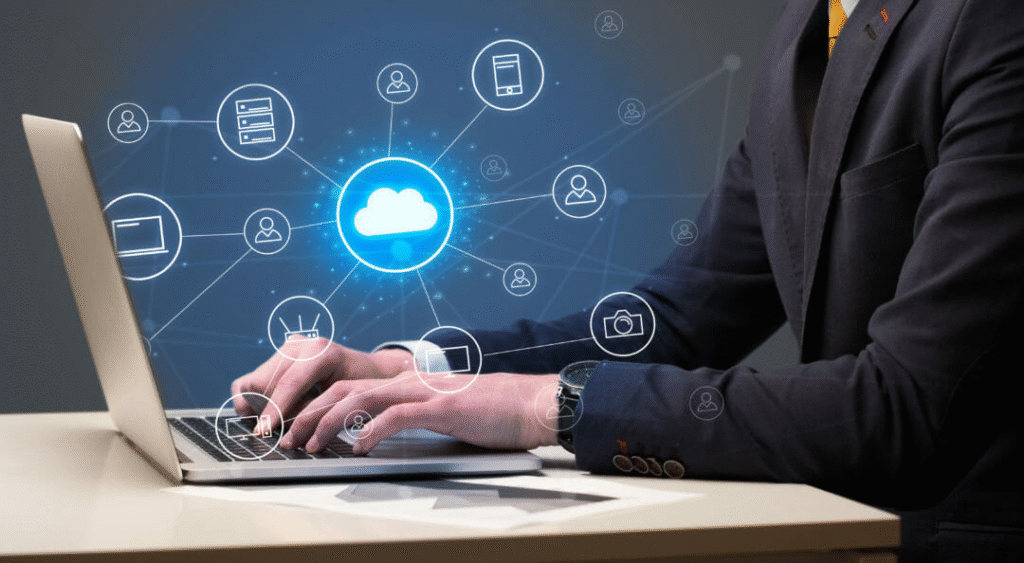
Cloud computing has quieted down from being a tech buzzword to becoming the invisible foundation of the modern internet. Almost every application we use today—from streaming our favorite shows to collaborating on a shared work spreadsheet—relies entirely on cloud servers. Businesses are rapidly moving away from keeping expensive, dusty computer servers inside their physical offices, opting instead for flexible hybrid and multi-cloud environments.
[Local Office Computers]
          │
          ▼
[Hybrid Cloud Infrastructure] ──► (Dynamic Resource Allocation)
          │
          ▼
[Global Remote Workforce] ──► (Instant Access from Anywhere)
By spreading their digital workloads across multiple cloud providers, companies ensure that their websites and apps never go offline, even during massive power outages. This flexible setup gives small startups the exact same computing power as multi-billion dollar corporations, allowing them to scale up their operations instantly as they acquire new customers around the world.
Upgrading Our Shared Digital Shield
As our personal and professional lives move deeper into the digital space, online hackers are becoming far more sophisticated. This reality has pushed cybersecurity directly into the spotlight for every major organization. Relying on a simple password and basic antivirus software is no longer enough to protect sensitive client records or proprietary business data.
To combat these threats, security teams are deploying AI-driven threat detection networks that watch over company data twenty-four hours a day. These systems learn the typical habits of employees and can instantly lock down a network the millisecond they notice suspicious activity, such as an account attempting to download millions of files in the middle of the night. Alongside these smart tools, businesses are adopting a Zero-Trust framework, which operates on a simple, safe rule: verify every single user and device every time, leaving absolutely no room for uninvited guests.
The Internet of Things: Making Our Physical World Smart
The Internet of Things (IoT) is an industry term for a beautifully simple concept: taking everyday physical objects and connecting them to the internet with smart sensors. We see this in our homes with smart thermostats that adjust the temperature based on our habits, and in our cities with connected streetlights that dim when no cars are around to save energy.
In the corporate world, industrial IoT is completely transforming supply chains and factories. Shipping companies place tiny sensors inside cargo containers to track the exact temperature, humidity, and location of fragile goods in real time. Factory managers use these sensors to monitor heavy machinery, allowing them to patch up a small mechanical issue before a machine breaks down completely and stops production.
Edge Computing: Processing Data Closer to Home
With millions of connected devices gathering information every second, sending all that raw data back to a centralized cloud server thousands of miles away can create serious lag. This delay is where edge computing steps in to save the day by handling processing tasks right where the data is actually collected.
Think of an autonomous vehicle driving down a busy street. It cannot afford to wait even a fraction of a second for a distant cloud server to process a live video feed of a pedestrian walking onto the crosswalk. By using edge computing, the car’s onboard computer processes the visual data locally and applies the brakes instantly. This technology is becoming a vital lifesaver for high-stakes environments like hospital patient monitors, smart city traffic management, and automated factory floor systems.
Redefining the Flexible Hybrid Workplace
Organizations are investing heavily in integrated communication platforms, interactive project maps, and smart cloud productivity spaces. These tools ensure that a team member sitting in a home office feels completely connected to colleagues working across the world. The goal is to build a workplace environment that is entirely flexible, deeply collaborative, and outcome-focused, allowing people to do their best work regardless of their physical time zone.
Step Inside: The Growth of VR and AR
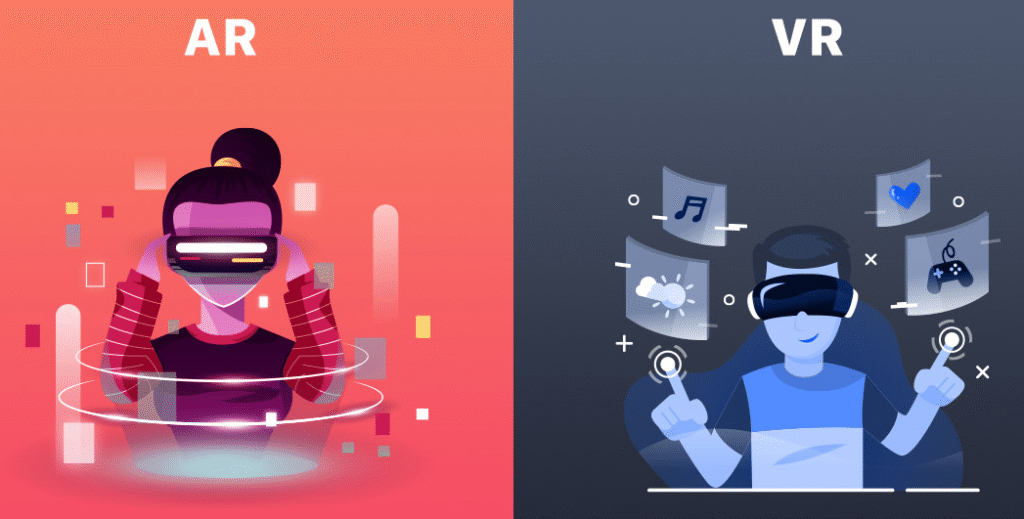
Virtual Reality (VR) and Augmented Reality (AR) have broken out of the video game world and are making a massive impact on education, medical training, and daily corporate operations. Instead of just looking at a flat computer screen, these immersive tools let us step inside a three-dimensional digital space.
Practical Uses of Immersive Tech
- Medical Internships: Future surgeons can practice delicate, high-risk procedures inside a hyper-realistic virtual operating room without any risk to a real patient.
- Industrial Training: Mechanical technicians can wear smart AR glasses that project step-by-step repair manuals directly onto real machine parts as they work.
- Retail Spaces: Home renovation brands let shoppers virtually place 3D furniture models inside their living rooms to see exactly how an item looks before buying it.
Building a Greener, Cleaner Digital Future
As our reliance on technology grows, the massive data centers powering the internet consume an immense amount of electricity. This reality has made sustainable technology and green innovation a massive priority for tech giants and local businesses alike.
Companies are actively designing energy-efficient software systems, building data centers that run entirely on renewable solar and wind energy, and choosing manufacturing materials that are easy to recycle. Smart energy management systems use AI to dynamically turn down cooling systems when data traffic is low. By focusing heavily on these green initiatives, the tech sector is proving that we can drive digital progress forward while actively protecting our planet for future generations.
Turning Raw Data into Actionable Wisdom
We are absolutely drowning in data, but data is only valuable if you can actually understand what it is trying to tell you. Modern data analytics and business intelligence tools act like a digital magnifying glass, helping companies turn messy spreadsheets into incredibly clear, visual stories.
Instead of guessing what customers might want to buy next month, business managers use predictive analytics to spot shifting consumer trends, track inventory speeds, and find hidden operational waste. Making decisions based on hard facts and real-time insights allows companies to move with incredible confidence, helping them launch better products and solve customer frustrations long before they become serious liabilities.
Frequently Asked Questions
What is the single biggest technology trend right now?
Without a doubt, Artificial Intelligence is the dominant force. It is fundamentally transforming every single industry by taking over routine writing, code generation, customer service, and deep data analysis.
Will all this automation take away human jobs?
While automation does take over routine, repetitive tasks, it also creates exciting new career paths focused on system design, data oversight, ethical management, and high-level strategy.
Why are companies moving away from single cloud providers?
Businesses prefer hybrid and multi-cloud setups because it stops them from being locked into one vendor, saves money, and ensures their systems stay online even if one provider crashes.
How does edge computing actually protect my safety?
By processing data locally right on the device rather than sending it to a distant server, edge computing eliminates dangerous transmission lag, which is critical for self-driving cars and medical monitors.
What makes a technology truly “sustainable”?
Sustainable tech focuses on using clean, renewable energy, energy-efficient code, and recyclable materials to reduce the carbon footprint of data centers and electronics.