
Artificial intelligence is no longer a technology that belongs only in research labs or science fiction movies. It has become a practical part of everyday business, helping organizations improve productivity, automate routine tasks, and make faster, data-driven decisions. From customer support chatbots and AI writing assistants to advanced analytics and workflow automation, businesses of every size are discovering new ways to use AI to work more efficiently.
At the same time, innovation is changing how companies operate and how employees perform their jobs. Remote work, cloud computing, digital collaboration, automation, and intelligent software have transformed the modern workplace. Many of the tasks that once required hours of manual effort can now be completed in minutes with the help of AI-powered tools.
These changes naturally raise important questions. How will AI affect jobs? Which skills will become more valuable? How can businesses prepare for the future while continuing to support their employees?
This guide explores expert perspectives on artificial intelligence, innovation, and the future of work. You’ll learn how technology is reshaping industries, the opportunities and challenges it brings, and the practical steps businesses and professionals can take to succeed in the years ahead.
Understanding Artificial Intelligence in Today’s Workplace

Artificial intelligence (AI) refers to computer systems that can perform tasks typically requiring human intelligence. These include understanding language, recognizing patterns, analyzing data, generating content, answering questions, and making predictions.
Modern workplaces use AI in many ways. Customer service teams rely on AI chatbots to answer common questions. Marketing professionals use AI to create content ideas and analyze campaign performance. HR teams use AI to screen resumes and schedule interviews. Developers use AI coding assistants to write and review software more efficiently.
The purpose of AI is not simply to automate work—it is to help people work smarter by reducing repetitive tasks and providing better insights.
Innovation Is Transforming Every Industry

Innovation is about finding better ways to solve problems, improve processes, and create value. While AI is a major driver of innovation, it is only one part of a much larger transformation.
Cloud computing, automation, big data, the Internet of Things (IoT), and advanced cybersecurity are helping organizations become more flexible and responsive. Businesses can collaborate across countries, analyze customer behavior in real time, and launch new products faster than ever before.
Industries such as healthcare, education, manufacturing, finance, retail, and logistics are adopting innovative technologies to improve efficiency, reduce costs, and deliver better customer experiences.
Companies that embrace innovation are often better prepared to adapt to changing market conditions and customer expectations.
How AI Is Changing the Future of Work

One of the biggest shifts in the workplace is the way AI is changing daily tasks. Many routine activities—such as organizing data, scheduling meetings, drafting reports, and responding to common customer questions—can now be automated.
This allows employees to spend more time on work that requires creativity, critical thinking, communication, and strategic decision-making.
Rather than replacing every job, AI is changing the nature of many roles. Employees increasingly work alongside intelligent software that assists with research, analysis, content creation, and administrative tasks.
The future of work is likely to involve greater collaboration between humans and AI rather than competition between the two.
The Benefits of AI for Businesses
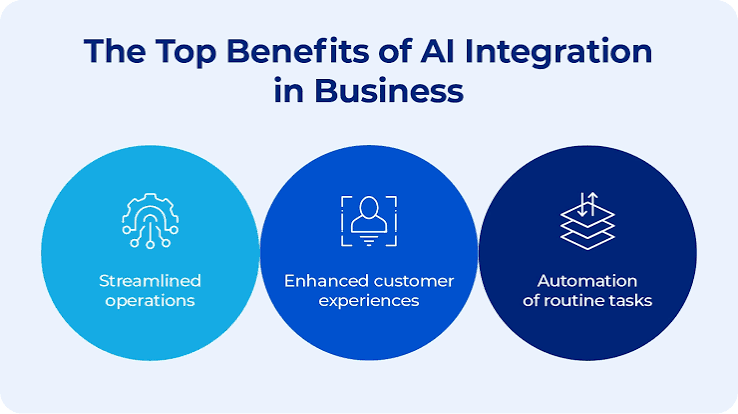
Businesses are adopting AI because it offers measurable advantages across many departments.
AI helps improve productivity by completing repetitive tasks quickly and accurately. It also supports better decision-making by analyzing large amounts of data and identifying trends that may not be obvious.
Customer service improves through AI chatbots and virtual assistants that provide instant support around the clock.
Marketing teams use AI to personalize campaigns, while finance departments automate reporting and forecasting.
These improvements help organizations operate more efficiently while allowing employees to focus on higher-value work.
Skills That Will Matter Most in the Future
As AI continues to evolve, technical knowledge alone will not guarantee success. Experts consistently emphasize the growing importance of human skills that machines cannot easily replicate.
These include:
- Critical thinking
- Creativity
- Communication
- Emotional intelligence
- Leadership
- Problem-solving
- Adaptability
- Collaboration
- Ethical decision-making
Digital skills will also become increasingly valuable. Understanding AI tools, data analysis, cybersecurity, cloud platforms, and digital collaboration software will help professionals remain competitive in the job market.
Lifelong learning is becoming an essential part of career development.
AI as a Workplace Assistant

Many organizations now think of AI as a digital assistant rather than a replacement for employees.
AI can summarize long documents, organize meeting notes, generate first drafts of reports, recommend improvements, answer routine questions, and analyze business data.
Employees remain responsible for reviewing information, making final decisions, and applying human judgment.
This partnership between people and AI often produces better results than either could achieve independently.
The Rise of Hybrid and Remote Work
Technology has permanently changed where and how people work.
Cloud-based collaboration platforms, video conferencing, project management software, and AI productivity tools make it possible for teams to work effectively from almost anywhere.
Hybrid work models continue to grow because they provide flexibility while maintaining opportunities for in-person collaboration.
AI supports remote teams by automating scheduling, organizing documents, summarizing meetings, and improving communication across time zones.
Challenges Businesses Must Address
Although AI offers many benefits, it also creates new challenges.
Organizations must ensure that AI systems are accurate, transparent, and secure. Protecting customer data and maintaining privacy remain top priorities.
Businesses should also avoid over-relying on automation. Human oversight is necessary to verify information, make ethical decisions, and handle situations that require empathy and context.
Another challenge is helping employees adapt to technological change. Investing in training and professional development can reduce uncertainty and improve confidence.
The Importance of Responsible AI
Experts increasingly emphasize the need for responsible AI development and use.
Businesses should ensure that AI systems are fair, unbiased, transparent, and accountable. Decisions affecting customers or employees should always include appropriate human oversight.
Organizations also need clear policies regarding data privacy, security, and ethical AI usage.
Responsible AI builds trust with customers, employees, and business partners while reducing long-term risks.
Innovation Creates New Career Opportunities
Although automation changes some jobs, innovation also creates entirely new career paths.
Growing fields include:
- AI engineering
- Machine learning
- Data science
- Cybersecurity
- Cloud computing
- AI product management
- Prompt engineering
- Digital transformation consulting
- Automation specialists
- AI ethics and governance
Professionals who continue learning and developing new skills will be well positioned for these emerging opportunities.
How Businesses Can Prepare for the Future
Preparing for the future requires more than simply purchasing new technology.
Organizations should begin by identifying business challenges that AI can realistically solve. Small pilot projects often provide valuable experience before expanding AI across the company.
Businesses should also invest in employee training so teams understand how to use AI effectively and responsibly.
Creating a culture that encourages innovation, collaboration, and continuous learning helps organizations adapt more successfully to future changes.
Future Trends to Watch
Experts expect several trends to shape the next generation of work.
Generative AI will continue improving content creation, software development, research, and business communication.
AI-powered assistants will become more personalized and capable of supporting daily work across multiple applications.
Automation will expand into more business processes, while predictive analytics will help organizations anticipate customer needs and market changes.
At the same time, demand for human creativity, leadership, empathy, and strategic thinking will continue to grow.
The future workplace will combine intelligent technology with uniquely human abilities.