
Technology is changing how people create, build, and share things online. Today, you do not always need years of coding experience to turn an idea into an application, and you cannot always trust a digital image or video just because it looks realistic. Two emerging trends are helping shape this new digital world: vibe coding and digital provenance.
Vibe coding makes software creation more accessible by allowing people to describe their ideas to AI tools using everyday language. Digital provenance, meanwhile, focuses on understanding where digital content originated, how it was created, and whether its history can be verified. Both trends offer exciting opportunities for content creators, developers, marketers, entrepreneurs, and everyday internet users.
In 2026, understanding these technologies can help creators work smarter, experiment with new ideas, and build greater trust with their audiences.
What Is Vibe Coding? Building Applications With AI Prompts
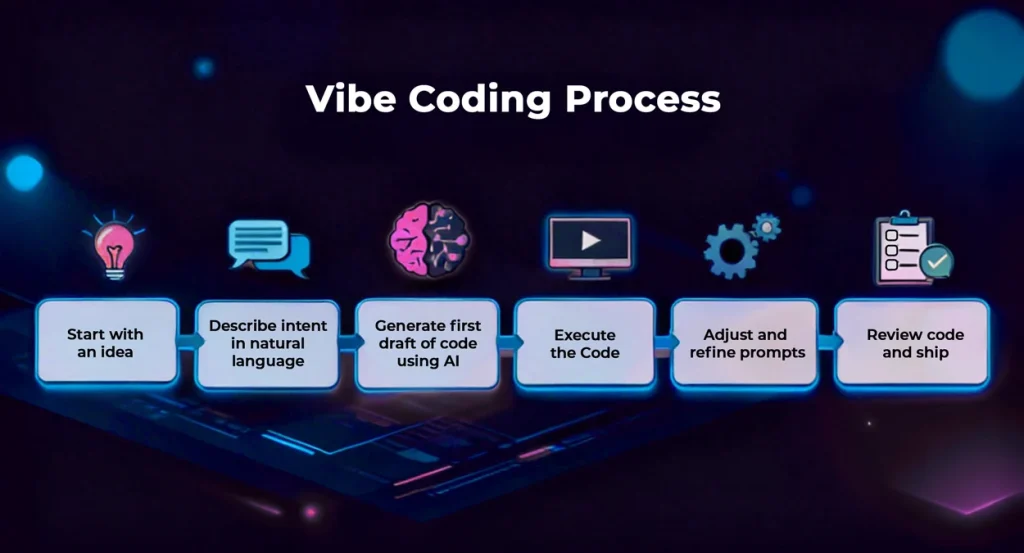
Imagine having an idea for a personal budgeting app, a website for your small business, or a simple tool that organizes your daily tasks. Traditionally, bringing that idea to life might require coding knowledge, technical experience, and considerable development time.
With vibe coding, you can start by describing what you want to build in plain language. An AI coding tool can then generate code, create an initial design, and help refine the application through follow-up instructions.
For example, you could enter a prompt such as:
Create a clean budgeting app where users can record daily expenses, organize spending by category, and view their monthly totals.
The AI can generate an initial version that you can test and improve. You might then ask it to change the colors, add a savings calculator, or make the layout easier to use.
According to Google’s explanation of vibe coding, this approach allows people to experiment with websites and applications without necessarily having traditional programming skills. However, complex or widely used products still require careful technical review.
Why Vibe Coding Is Becoming Important
Vibe coding changes the starting point of software development. Instead of beginning with lines of code, users can begin with an idea and use AI to help turn it into something practical.
Some of its main advantages include:
- Faster prototyping: Create a basic version of an idea before investing heavily in development.
- More accessible creativity: People with limited coding experience can experiment with digital products.
- Easier customization: Refine layouts, features, and functionality using conversational instructions.
- Better collaboration: Creators can develop an initial concept and share it with developers for further improvement.
The real benefit is not simply that AI can write code. It is that people can explore ideas that might otherwise remain in a notebook or brainstorming session.
How Content Creators Can Use Vibe Coding
Content creators do not have to limit themselves to publishing articles, videos, or social media posts. They can also use AI-assisted development to build small digital tools that make their content more useful.
| Creator’s goal | Vibe coding idea | Potential benefit |
|---|---|---|
| Grow a blog | Build a topic idea generator | Organize future content |
| Improve audience engagement | Create an interactive quiz | Encourage participation |
| Support readers | Develop a simple calculator | Offer practical value |
| Manage content | Create a publishing tracker | Keep tasks organized |
| Build a personal brand | Make a portfolio website | Present work professionally |
For example, a finance blogger could create a monthly savings calculator to accompany an article about budgeting. A travel creator could build a trip-planning checklist that readers can use alongside a destination guide.
These tools can make content more interactive and give audiences a reason to return to a website.
A Simple Vibe Coding Workflow
1. Start with a clear idea
Define the problem your application should solve and who will use it.
2. Write a detailed prompt
Explain the required features, design, audience, and expected results.
3. Test and improve
Try the application, identify problems, and ask the AI to refine its output.
4. Review before launching
Check functionality, privacy, security, accessibility, and reliability before sharing it with users.
The final step matters most. AI-generated code can contain errors, insecure features, or functionality that does not work as expected. Treat AI as a development partner rather than assuming its first result is ready for public use.
What Is Digital Provenance? Understanding Where Digital Content Comes From

Now consider another common situation: you see a dramatic photograph, a breaking-news video, or a screenshot shared thousands of times online. It looks convincing, but you do not know who created it, whether it has been edited, or whether the caption describes it accurately.
This is where digital provenance becomes valuable.
Digital provenance is the record of a digital asset’s origin and history, including available information about its creation, editing, and subsequent handling. Depending on the technology used, this information may help people understand what tools were involved and whether recorded details have been changed.
As AI-generated images, realistic videos, and synthetic voices become easier to create, knowing where content comes from is an increasingly important part of responsible digital publishing.
How Digital Provenance Works
One approach is the use of Content Credentials, based on the C2PA technical standard. These credentials can attach verifiable information about a digital file’s creation and editing history. The information can be cryptographically signed to help detect unauthorized changes to the recorded credentials.
Depending on the file and the software involved, provenance information may help answer questions such as:
- Which tool or process created the file?
- Was the image or video edited?
- Is there a recorded history of changes?
- Can the available credentials be verified?
For content creators, this adds another layer of transparency. Instead of asking audiences to rely entirely on a caption or an account’s reputation, publishers may be able to provide additional information about how a media asset was produced.
It is important to remember that provenance does not automatically prove that a photograph tells the truth. A genuine photograph can be paired with a misleading caption, and a file without provenance information is not necessarily fake. Verification is one part of a broader fact-checking process.
Why Digital Provenance Matters to Content Creators
Trust is an essential part of building an online audience. Readers want accurate information, brands want to protect their reputations, and publishers need to avoid spreading misleading material.
Digital provenance can support these goals in several ways.
1. Supporting transparent publishing
Creators can provide available information about how images, videos, and other digital assets were made or edited.
2. Helping audiences assess media
Verifiable creation records can provide useful context when viewers encounter unfamiliar or potentially manipulated content.
3. Improving responsible AI use
Creators using AI-generated visuals can consider disclosure and provenance tools to help audiences understand how their media was produced.
4. Supporting brand credibility
Businesses and publishers can build stronger content-review processes by checking sources, maintaining original files, and recording relevant edits.
For example, a travel blogger publishing a photograph of a destination could retain the original image and its available metadata. If the image is edited for brightness or cropping, the creator can keep track of those changes and avoid presenting a heavily altered scene as an untouched photograph.
This does not eliminate the need for editorial judgment, but it can make the publishing process more transparent.
Vibe Coding vs. Digital Provenance: What’s the Difference?
Although these trends address different problems, they share an important theme: helping people use digital technology more effectively.
| Feature | Vibe coding | Digital provenance |
|---|---|---|
| Main purpose | Build applications with AI assistance | Understand a digital asset’s origin and history |
| Primary users | Developers, creators, entrepreneurs | Creators, journalists, publishers, audiences |
| Core technology | AI coding assistants and natural-language prompts | Metadata, cryptographic credentials, verification tools |
| Main advantage | Makes prototyping and experimentation more accessible | Adds transparency to digital content |
| Main concern | Bugs, security, privacy, and unreliable code | Missing or incomplete records and misleading context |
| Example | Building a blog topic generator | Checking the recorded history of an image |
Vibe coding helps people create new digital experiences, while digital provenance helps people examine the history of digital content. Together, they highlight two important needs in modern technology: making creation easier and making information more trustworthy.
How These Trends Could Shape the Future of Content Creation

The relationship between these trends becomes particularly interesting when we consider how content is produced and published.
A creator could use vibe coding to build an interactive website, create a tool that helps readers explore a topic, or develop a custom content-planning application. At the same time, digital provenance practices could help that creator document the origins of images and other media used on the website.
This creates a more complete digital workflow: AI can assist with building the experience, while verification practices help support transparency around the content being shared.
Three Opportunities Worth Watching in 2026
More interactive content: Blogs may increasingly include calculators, quizzes, small web applications, and personalized experiences rather than relying entirely on static articles.
Greater attention to content authenticity: Publishers and creators may put more effort into documenting image sources, checking media histories, and explaining when AI has been used.
A stronger combination of creativity and accountability: People may be able to produce digital products faster, but quality control, security, accurate information, and audience trust will remain essential.
These are opportunities rather than guaranteed outcomes. Their impact will depend on how tools develop, whether platforms support verification standards, and how responsibly creators use the technology.
Challenges Creators Should Not Ignore

New technology can make work easier, but it does not remove responsibility.
With vibe coding, an application might look polished while containing hidden bugs or weaknesses. Before launching a tool, creators should test its features, protect user information, and seek technical help when the application handles sensitive data or important transactions.
Digital provenance also has limitations. Records may be missing, incomplete, or removed during editing and distribution. A verification result must be interpreted carefully, and provenance information alone cannot establish whether every claim associated with a file is true.
A responsible approach is to combine AI-assisted creativity with human review, reliable sources, and clear communication.
Practical Tips for Creators Getting Started
You do not need to adopt every new tool immediately. Start with small experiments that solve real problems.
- Try one useful project: Use vibe coding to prototype a calculator, content tracker, or simple interactive feature.
- Write specific prompts: Explain the audience, purpose, required functions, and limitations rather than asking AI to build something vague.
- Keep a human in the loop: Test generated applications and review their security before deployment.
- Preserve original media: Keep original files and source details whenever possible.
- Check available credentials: Use suitable provenance verification tools when the origin or editing history of an image or video matters.
- Be transparent: Clearly explain relevant AI involvement and avoid making authenticity claims that you cannot support.
The best results come from using these technologies to solve meaningful problems, not simply following a trend.
Digital Provenance and Vibe Coding: The Future of Technology
Technology is changing how people create, build, and share things online. Today, you do not…

Trending Now 2026: Discover What’s Popular & Making Waves
The internet moves quickly. A topic can become popular within hours, a new product can…

Expert Insights 2026: Practical Knowledge for Better Growth
In a world where information is available everywhere, knowing what information to trust, understand, and…

Trending Now 2026: Latest News, Trends & Viral Topics
The internet moves quickly. One moment, a topic is barely known, and a few hours…
What’s Trending in 2026: Latest Stories, Viral Topics & Internet Trends
The internet moves faster than ever in 2026. A topic can go from a small…

The New Internet Culture: What’s Trending in the Digital World
Let’s be honest for a second: open any social media app today, and within five…