
In an era characterized by exponential technological shifts, massive data overloads, and unpredictable global markets, human cognitive agility has become the ultimate currency. Every single day, we are flooded with fragments of information, conflicting viewpoints, and rapid systematic changes that disrupt our personal and professional lives. In this volatile environment, relying on outdated routines, emotional impulses, or superficial assumptions is a direct path to operational failure.
To thrive, individuals must master problem-solving and critical thinking. These foundational cognitive frameworks allow us to cut through complex noise, separate objective facts from structural biases, and engineer highly innovative solutions to dense, multi-layered challenges. These skills transform passive observers into active, decisive leaders who face uncertainty with calm, analytical confidence.
The Symbiotic Mechanics of Critical Analysis and Resolution
While popular discourse often groups these intellectual disciplines into a single phrase, they represent two distinct, tightly coordinated phases of cognitive processing.
[Critical Thinking: Question Assumptions ➔ Analyze Evidence ➔ Evaluate Perspectives]
                                          ▼
[Problem-Solving: Pinpoint the Root Cause ➔ Brainstorm Paths ➔ Execute Action]
Critical thinking is essentially an investigative, evaluative discipline. It focuses on auditing incoming data, checking underlying assumptions, identifying logical fallacies, and determining the true validity of an observation based on cold evidence. Conversely, problem-solving is an action-oriented, forward-looking mechanism. It takes the clear, unfiltered insights generated by critical analysis and applies them to map out practical pathways to resolve a specific vulnerability.
They operate as a continuous psychological feedback loop. You cannot execute an elegant, long-term solution to an operational challenge without first using critical reasoning to diagnose the hidden systemic failures causing that issue in the first place.
Cultivating an Intellectual Mindset: Curiosity and Cognitive Flexibility

The absolute bedrock of any sophisticated analytical mind is an unyielding, insatiable sense of intellectual curiosity. True critical thinkers never accept incoming data blocks at face value. Instead, they habitually cross-examine reality, asking deep, foundational questions: Why did this trend manifest? How does this variable correlate with that structural failure? What hidden consequences unfold if we alter this single metric?
+--------------------+------------------------------------+------------------------------------+
| Cognitive Trait    | Legacy Linear Thinking             | Advanced Critical Mindset          |
+--------------------+------------------------------------+------------------------------------+
| Data Intake        | Accepts first available answer     | Cross-examines source credibility  |
| Perspective        | Rigidly stuck in single viewpoint  | Welcomes diverse, opposing views   |
| Reaction to Error  | Defensive, covers up mistakes      | Welcomes errors as diagnostic data |
| Bias Awareness     | Blind to personal preconceptions   | Actively uncovers internal biases  |
+--------------------+------------------------------------+------------------------------------+
This persistent questioning must be paired with cognitive flexibility—the intellectual willingness to alter your beliefs when presented with superior, verifiable data. An open mindset recognizes that personal biases, emotional attachments, and historical assumptions can cloud objective logic. By welcoming constructive feedback and actively searching for perspectives that challenge your comfort zones, you expand your mental models. This openness lets you spot creative opportunities that rigid thinkers miss entirely.
Architectural Deconstruction: Breaking Down Complex Challenges

When teams confront massive, multi-variable institutional crises, the sheer scale of the problem can easily trigger psychological paralysis. The most effective strategy to overcome this mental roadblock is a process known as first-principles deconstruction. This technique requires you to systematically strip a massive problem of its superficial layers, breaking it down into its smallest, foundational components.
[Massive System Crisis]
          │
          ├──► Component A: Logistical Bottlenecks ──► [Targeted Root Fix]
          ├──► Component B: Communication Silos   ──► [Targeted Root Fix]
          └──► Component C: Software Latency      ──► [Targeted Root Fix]
By segmenting a sprawling crisis into isolated, manageable variables, you eliminate cognitive overwhelm. This structure lets your team allocate resources efficiently, focusing intent on solving specific, high-leverage pain points instead of draining energy fighting a vague, shifting phantom.
Information Literacy: Navigating Data in the Digital Age
We are currently drowning in an ocean of data, yet starving for authentic wisdom. Building robust problem-solving skills requires you to develop rigorous information literacy. To make rational, high-stakes decisions, you must build a disciplined system for gathering, auditing, and verifying evidence.
Step-by-Step Data Verification Protocol
1.Execute Multi-Source Cross-Verification:Phase 1.
Never rely on a single data point or an isolated reporting source. Cross-reference incoming metrics across multiple independent channels to isolate anomalies.
2.Audit Source Authority and Motivation:Phase 2.
Critically analyze the institutional background, financial motivations, and historical objectivity of the entity generating the data matrix.
3.Separate Core Facts From Emotional Narratives:Phase 3.
Strip away sensational language, subjective adjectives, and emotionally charged rhetoric to isolate the cold, quantifiable statistics underneath.
4.Establish Clear Error Boundaries:Phase 4.
Calculate the statistical margin of error, identify potential collection biases, and determine missing context before feeding information into decision engines.
Strategic Decision-Making: Balancing Logic and Predictive Risk
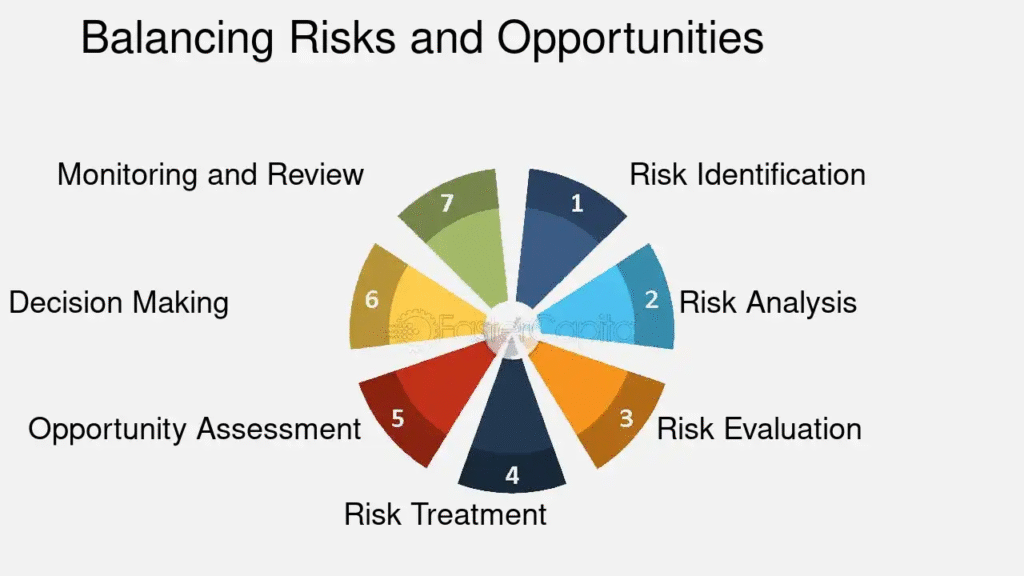
Once you parse your data and isolate a challenge’s root causes, you must navigate the complex phase of strategic decision-making. This step requires balancing logical reasoning against predictive risk. Rash thinkers often grab the first functional patch that comes to mind, completely ignoring long-term systemic side effects.
Advanced strategists evaluate options through multi-attribute utility analysis. This means mapping out every potential path and measuring it against a strict set of business criteria: financial cost, implementation speed, resource drain, and long-term risk.
By running potential solutions through rigorous risk-modeling matrices, you can foresee hidden pitfalls and unintended consequences before deploying capital. This disciplined balancing act ensures your short-term quick fixes don’t accidentally create catastrophic long-term liabilities.
Unleashing Cognitive Innovation through Structured Brainstorming
Logical reasoning is excellent for eliminating bad options, but solving truly unprecedented problems requires a powerful burst of cognitive innovation. When historical models no longer match current market realities, organizations must break away from conventional patterns and look at challenges from totally radical angles.
To spark this type of thinking, teams should use structured lateral ideation frameworks. This means intentionally challenging standard industry assumptions and running thought experiments like: “How would we solve this problem if our budget was cut to zero? What changes if our timeline drops from six months to six days?”
By forcing the brain out of its comfort zones, you unlock highly creative pathways. Cultivating innovation means treating creativity as a repeatable, structured process of combining entirely different ideas to forge a superior path forward.
Embracing Failures as Iterative Diagnostic Data
The most proficient analytical thinkers treat personal setbacks and operational mistakes with a unique psychological outlook. Instead of viewing a failure as a demoralizing indictment of their intelligence, they see it as highly valuable iterative diagnostic data.
[Deploy Solution] ➔ [Encounter Failure] ➔ [Root-Cause Post-Mortem] ➔ [Refine Model] ➔ [Succeed]
Adopting this perspective changes your relationship with mistakes. When a deployed solution misses its target, a critical thinker steps back and runs a blameless post-mortem analysis. They isolate exactly where the assumptions broke down, update their mental models, and quickly iterate their approach. This resilience transforms temporary roadblocks into powerful engines for continuous strategic growth.
Team Collaboration: Maximizing Intellectual Diversity
No single professional, regardless of their individual intelligence quotient, holds a monopoly on wisdom. In our highly interconnected business world, the most complex, systemic challenges are solved by leveraging intellectual diversity within cross-functional teams.
Sociological studies confirm that teams with high cognitive diversity solve complex problems three times faster than groups of homogenous experts who share identical training and mental biases.
When you bring together professionals from completely different backgrounds—such as software engineering, creative design, legal compliance, and field operations—you break down insular corporate silos. True collaboration relies on creating a safe space where team members can openly debate ideas, question old processes, and challenge consensus without fear of professional backlash. This collective friction grinds away weak ideas, leaving behind highly refined, resilient solutions.
Everyday Habits to Build Sharp Analytical Muscles

Just like physical fitness, high-level critical thinking and problem-solving require consistent, structured exercise. You cannot expect your brain to think clearly during a high-stakes corporate crisis if you let it drift through passive compliance during your daily routine.
- Engage with Strategic Game Environments: Regularly challenge your brain with complex strategy games, logic puzzles, and immersive simulations that force you to plan multiple moves ahead and manage shifting variables.
- Deconstruct Case Studies Daily: Read deep-dive investigative journalism and business post-mortems. Analyze how major historical decisions succeeded or failed, and try to find alternative solutions.
- Participate in Structured Debates: Intentionally defend a perspective you personally disagree with. This exercise breaks down cognitive rigidity, forcing you to find valid logic in opposing viewpoints.
- Keep a Daily Decision Journal: Spend ten minutes every evening reflecting on your choices. Note what went well, identify where emotional biases slipped into your logic, and plan how to handle similar situations better next time.
The Power of Patience and Continuous Lifelong Learning
Building elite critical thinking and problem-solving skills is an ongoing, lifelong journey. It requires deep patience and a commitment to continuous education. The digital landscape will keep shifting, and the nature of global work will continue to transform. To stay ahead, you must remain an active, dedicated student of reality.
[Read Interdisciplinary Books] ➔ [Learn Diverse Skills] ➔ [Acquire Novel Experiences] ➔ [Expand Mental Models]
By constantly absorbing new books, exploring unfamiliar industries, and trying novel experiences, you continually expand your mental toolbox. This ongoing development ensures that when a completely unprecedented challenge appears, your mind is agile, prepared, and ready to engineer a brilliant path forward.
Frequently Asked Questions
What is the core difference between critical thinking and problem-solving?
Critical thinking is an analytical, evaluative process focused on checking data accuracy, spotting biases, and questioning logic. Problem-solving is a proactive, goal-driven mechanism focused on taking those analytical insights and building a practical, step-by-step plan to fix a specific issue.
How can I spot an unconscious bias in my own decision-making process?
By checking if you are instantly accepting data simply because it confirms what you already believe—a trap known as confirmation bias. To catch this, look for evidence that contradicts your view, invite constructive feedback from diverse peers, and ask yourself if you would trust the same data if it supported an opposing conclusion.
Why is breaking complex problems down into smaller parts so effective?
Because it prevents cognitive overload and stops psychological paralysis. Dividing a massive crisis into isolated, distinct components helps teams spot the true root causes of an issue, manage resources wisely, and fix specific vulnerabilities step by step.
Can an over-reliance on logic hurt creative problem-solving?
Pure, rigid logic can sometimes limit creativity if applied too early in the ideation phase, as it might kill unusual, innovative ideas before they can develop. The best approach is to use creative, lateral thinking to brainstorm wild new concepts, and then apply strict logic later to test, refine, and execute those ideas.
How do communication skills impact a team’s problem-solving success?
Excellent communication ensures that insights, task expectations, and project risks are shared clearly across the team. It helps prevent misunderstandings, allows different perspectives to blend together smoothly, and makes it easy to explain complex technical solutions to non-technical stakeholders.